
"idle land"
200 article(s) found

The growing environment of coffee beans how to grow coffee beans
First, planting time: April 15-25 period. Second, planting location: plain, hillside, wasteland, front and back house, forest and fruit tree seedlings can be planted, but should not be planted in tall trees or other unventilated places. Third, coffee does not like water and fertilizer, conditional planting can use farm manure, during the growth period, if the drought watering 1-2 is the best, absolutely do not allow the use of various chemical fertilizers and weeding

The growth process of Coffee beans knowledge of Coffee planting
First, planting time: April 15-25 period. Second, planting location: plain, hillside, wasteland, front and back house, forest and fruit tree seedlings can be planted, but should not be planted in tall trees or other unventilated places. Third, herbal coffee does not like flood and fertilizer, conditional planting can use farm manure, during the growth period, it is best to irrigate 1-2 water during the growth period, absolutely do not allow the use of all kinds of chemical fertilizers and

The planting techniques of herbal coffee basic knowledge of coffee
First, planting time: April 15-25 period. Second, planting location: plain, hillside, wasteland, front and back house, forest and fruit tree seedlings can be planted, but should not be planted in tall trees or other unventilated places. Third, herbal coffee does not like flood and fertilizer, conditional planting can use farm manure, during the growth period, it is best to irrigate 1-2 water during the growth period, absolutely do not allow the use of all kinds of chemical fertilizers and

Most of the coffee producing areas of Papua New Guinea are organic coffee.
The vast majority of coffee in Papua New Guinea is organic coffee, but it is not intentional by the local people. it is really because of inconvenient transportation and economic hardship, the average coffee farmer is determined not to buy it, nor can he afford chemical fertilizer. Bird of Paradise coffee has a lively flavor, with bright sour and fruity aromas, different from the dreary Asian beans, but a bit of African beans. Therefore, although it is not a famous family,
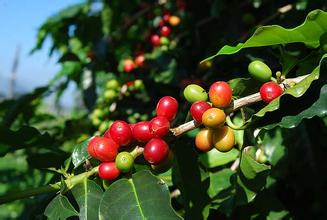
Coffee Knowledge Points: Detailed Analysis of Knowledge Points about Coffee Cultivation
I. Planting time: April 15 - 25. II. Planting location: plain, hillside, wasteland, house in front of house, forest fruit tree seedlings can be planted, but it is not suitable to plant in tall trees or other unventilated places. Third, herbal coffee does not like water and fertilizer, conditional planting can use farm manure, during the growth period in case of drought irrigation 1-2 times the best, absolutely do not allow the use of various fertilizers and

Papua New Guinea Coffee with plump grains and varied taste
Located in tropical Papua New Guinea, the climate is humid and rainy, rich in coconuts and coffee. Forests and mineral resources are also rich. Rabur is the sixth largest town in the South Pacific island nation and an important shipping hub. Its rich coffee and other goods are exported from this port. Papua New Guinea has a detached and primitive natural environment and its land is vast and fertile. Its unique volcano

China: is there coffee in the culture?
Coffee has entered the life of Chinese people. In China, people like to drink coffee more and more. Coffee culture, like Chinese tea art, has a long history. Each country has its own unique coffee culture, some pay attention to the quality and taste of coffee, some pay attention to the environment and atmosphere of drinking coffee, and some pay more attention to the etiquette and procedure of drinking coffee. Whether at home or in the office

The growth process of coffee the planting time of boutique coffee trees
First, planting time: April 15-25 period. Second, planting location: plain, hillside, wasteland, front and back house, forest and fruit tree seedlings can be planted, but should not be planted in tall trees or other unventilated places. Third, herbal coffee does not like flood and fertilizer, conditional planting can use farm manure, during the growth period, it is best to irrigate 1-2 water during the growth period, absolutely do not allow the use of all kinds of chemical fertilizers and

The planting technology of coffee tree introduces the environment in which coffee tree is suitable to grow.
Field management of loosening soil and weeding: when the seedling height is 3cm to 6cm, the weak or overdense seedlings are pulled out; when the seedling height is 10cm and 13cm, the plant distance is about 30cm. Soil loosening and weeding were carried out at the same time between seedlings and fixed seedlings to keep the soil loose. Coffee beans are more drought-tolerant, and the soil can grow normally when the soil moisture is maintained. During the drought, the coffee beans should be properly watered, but there should be less squatting seedlings during the seedling fixing period.

China: is there coffee in the culture?
Coffee has entered the life of Chinese people. In China, people like to drink coffee more and more. Coffee culture, like Chinese tea art, has a long history. Each country has its own unique coffee culture, some pay attention to the quality and taste of coffee, some pay attention to the environment and atmosphere of drinking coffee, and some pay more attention to the etiquette and procedure of drinking coffee. Whether at home or in the office

Planting techniques of herbaceous Coffee Coffee trees have been planted in several months
First, planting time: April 15-25 period. Second, planting location: plain, hillside, wasteland, front and back house, forest and fruit tree seedlings can be planted, but should not be planted in tall trees or other unventilated places. Third, herbal coffee does not like flood and fertilizer, conditional planting can use farm manure, during the growth period, it is best to irrigate 1-2 water during the growth period, absolutely do not allow the use of all kinds of chemical fertilizers and

The planting technology of coffee the planting environment introduces which country is the most suitable for growing coffee
Field management of loosening soil and weeding: when the seedling height is 3cm to 6cm, the weak or overdense seedlings are pulled out; when the seedling height is 10cm and 13cm, the plant distance is about 30cm. Soil loosening and weeding were carried out at the same time between seedlings and fixed seedlings to keep the soil loose. Coffee beans are more drought-tolerant, and the soil can grow normally when the soil moisture is maintained. During the drought, the coffee beans should be properly watered, but there should be less squatting seedlings during the seedling fixing period.

Papua New Guinea Coffee Flavor Manor Introduction Bird of Paradise Manor
Papua New Guinea has a transcendent, pristine natural environment with vast and fertile land. Its characteristic volcanic soil and abundant rainfall create excellent natural conditions for the growth of coffee. Papua New Guinea's top coffee beans are as beautiful and precious as the country's national bird of paradise. Because coffee is commonly grown in the country at altitudes of 1,300 to 1,800 meters, coffee

Development status of Dehong Coffee Industry _ cultivation of Dehong Coffee _ what is the quality of Dehong Coffee
Professional coffee knowledge exchange more coffee bean information Please pay attention to the coffee workshop (Wechat official account cafe_style) the unique natural conditions of Dehong Prefecture have created the outstanding quality of small grain coffee, its rich and mellow flavor, unique flavor, by Nestl é, Starbucks and other international famous coffee merchants as one of the best quality coffee in the world. The planting situation of ● Dehong is introduced in China

Both fragrant and fruity Papua New Guinea coffee introduces boutique coffee.
Papua New Guinea has a detached and primitive natural environment and its land is vast and fertile. Its unique volcanic rock soil and abundant rainfall create excellent natural conditions for the growth of coffee. The top coffee beans in Papua New Guinea are as beautiful and precious as the country's national bird of paradise. Coffee is widely grown in the country at an altitude of 1300 to 1800 meters above sea level.

Introduction of Colombian Coffee Brand in Columbia Coffee Manor
Having tasted authentic Colombian coffee, I would like to know more about the process of growing and producing coffee. Because of the high incidence of social problems in the past, it is difficult for tourists to see pure Colombian coffee plantations for the sake of safety. in recent years, as the government has intensified its crackdown on violent organizations, more and more tourists are able to see the coffee plantations in the mountains and witness the complete failure of coffee production.

Introduction to coffee flavor description of Paradise Bird Manor in Papua New Guinea
In Papua New Guinea, about 75% of coffee products come from small local farmers.

Moderate acidity and mellow taste of Babu Coffee Wiki Valley
What is particularly amazing is that the video taken by Mick when he first went to the mountain to meet the aborigines was preserved and later combined with interviews with the locals to produce a documentary about the contact between the Highland aborigines and modern civilization. The film is called first contact (first contact). After its release in 1983, the film shocked the world and won numerous awards. An image like this is unprecedented.

Introduction to the characteristics of boutique coffee Babu coffee beans
The island of Guinea is a large mountainous island shared by Indonesia and Papua New Guinea. The island's alpine aborigines were not discovered by the Australian Mick Leahy until 1930. They retained a primitive civilization and became a paradise for anthropological studies. What is particularly amazing is that the video taken by Mick when he first went to the mountain to meet the aborigines was preserved and later

Papua New Guinea coffee producing country Wikipedia Valley producing area introduction
It is shared by Indonesia and Papua New Guinea. The island's alpine aborigines were not discovered until 1930 by Australia Mick Leahy, and they have retained their primitive civilization, making them a paradise for anthropological research. And what's particularly amazing is that the video of Mick's first encounter with the aborigines has been preserved and then combined with interviews with the locals.